Do lithium battery chargers work with all lithium battery chemistries?
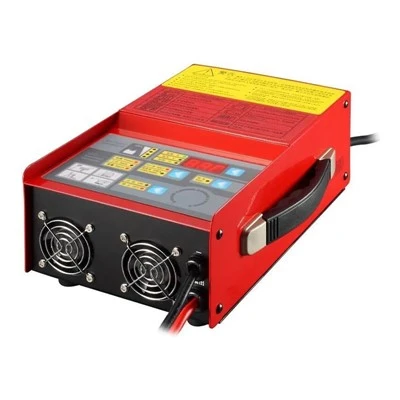
As a supplier of lithium battery chargers, I often encounter customers who have questions about the compatibility of chargers with different lithium battery chemistries. This topic is not only crucial for the proper functioning of lithium batteries but also for ensuring their safety and longevity. In this blog, I aim to delve into the intricacies of this issue and shed light on whether lithium battery chargers can work with all lithium battery chemistries. Lithium Battery Charger
Understanding Lithium Battery Chemistries
Lithium batteries come in various chemistries, each with its unique properties, advantages, and limitations. The most common lithium battery chemistries include Lithium Cobalt Oxide (LiCoO₂), Lithium Manganese Oxide (LiMn₂O₄ or LMO), Lithium Iron Phosphate (LiFePO₄ or LFP), and Lithium Nickel Manganese Cobalt Oxide (LiNiMnCoO₂ or NMC).
- Lithium Cobalt Oxide (LiCoO₂): This chemistry offers high energy density, making it suitable for applications where space and weight are critical, such as smartphones and laptops. However, it has relatively poor thermal stability and a limited cycle life.
- Lithium Manganese Oxide (LiMn₂O₄ or LMO): LMO batteries are known for their good thermal stability, high power output, and low cost. They are commonly used in power tools and electric vehicles.
- Lithium Iron Phosphate (LiFePO₄ or LFP): LFP batteries are renowned for their excellent safety, long cycle life, and good thermal performance. They are widely used in applications where safety and durability are paramount, such as energy storage systems and electric buses.
- Lithium Nickel Manganese Cobalt Oxide (LiNiMnCoO₂ or NMC): NMC batteries combine the high energy density of LiCoO₂ with the stability of LMO and other elements. They are a popular choice for electric vehicles and portable electronics due to their high energy density and good cycle life.
Charging Requirements for Different Lithium Battery Chemistries
The charging requirements for lithium batteries vary depending on their chemistry. These requirements primarily involve the charging voltage, charging current, and charging algorithm.
- Charging Voltage: Each lithium battery chemistry has a specific maximum charging voltage. For example, LiCoO₂ batteries typically have a maximum charging voltage of 4.2V per cell, while LFP batteries have a maximum charging voltage of around 3.65V per cell. Exceeding the maximum charging voltage can lead to overcharging, which may cause the battery to overheat, swell, or even catch fire.
- Charging Current: The charging current also varies depending on the battery chemistry and its capacity. Fast-charging can significantly reduce the charging time but may also generate more heat and reduce the battery’s lifespan. Therefore, it is essential to select an appropriate charging current based on the battery’s specifications.
- Charging Algorithm: Different lithium battery chemistries require different charging algorithms to ensure safe and efficient charging. For instance, some batteries may require a constant current – constant voltage (CC – CV) charging algorithm, where the charger first supplies a constant current until the battery reaches a certain voltage, and then switches to a constant voltage mode to complete the charging process.
Compatibility of Lithium Battery Chargers with Different Chemistries
In general, lithium battery chargers are not compatible with all lithium battery chemistries. A charger designed for one type of lithium battery chemistry may not provide the correct charging voltage, current, or algorithm for another type of chemistry.
- Overcharging and Undercharging: Using an incompatible charger can lead to overcharging or undercharging. Overcharging can cause the battery to degrade rapidly, reduce its capacity, and pose a safety hazard. Undercharging, on the other hand, can result in incomplete charging, reducing the battery’s runtime and overall performance.
- Safety Risks: Mismatched chargers can also increase the risk of fire or explosion. For example, if a charger designed for LiCoO₂ batteries is used to charge LFP batteries, the higher charging voltage may cause the LFP battery to overheat and potentially catch fire.
How Our Chargers Address Compatibility Issues
As a lithium battery charger supplier, we understand the importance of compatibility and safety. Our chargers are designed with advanced technology to ensure compatibility with multiple lithium battery chemistries.
- Adjustable Charging Parameters: Our chargers feature adjustable charging voltage and current settings, allowing users to select the appropriate parameters for different lithium battery chemistries. This ensures that the battery is charged safely and efficiently, regardless of its chemistry.
- Intelligent Charging Algorithms: We incorporate intelligent charging algorithms into our chargers. These algorithms can automatically detect the battery chemistry and adjust the charging process accordingly. For example, if a user connects an LFP battery to our charger, the charger will recognize the battery type and apply the appropriate charging voltage, current, and algorithm.
- Safety Features: Our chargers are equipped with multiple safety features, such as over – voltage protection, over – current protection, and short – circuit protection. These features help prevent damage to the battery and ensure the safety of the user.
Case Studies
To illustrate the importance of using compatible chargers, let’s look at a few case studies.
- Case 1: Smartphone Battery Failure A user tried to charge their smartphone battery, which was a LiCoO₂ chemistry, with a charger designed for LFP batteries. The charger provided a lower charging voltage than required, resulting in undercharging. Over time, the battery’s capacity decreased significantly, and the smartphone’s runtime became shorter.
- Case 2: Electric Vehicle Battery Fire In another case, an electric vehicle owner used an incompatible charger to charge their NMC battery. The charger overcharged the battery, causing it to overheat and eventually catch fire. This incident not only damaged the vehicle but also posed a serious safety risk to the owner and the surrounding environment.
Conclusion
In conclusion, lithium battery chargers do not work with all lithium battery chemistries. Each lithium battery chemistry has its unique charging requirements, and using an incompatible charger can lead to poor battery performance, reduced lifespan, and safety hazards.
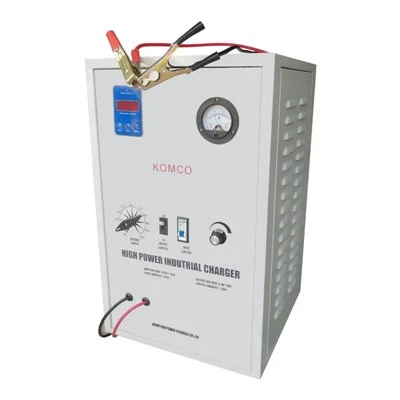
As a reliable lithium battery charger supplier, we are committed to providing high – quality chargers that are compatible with multiple lithium battery chemistries. Our chargers are designed to ensure safe and efficient charging, protecting your batteries and extending their lifespan.
Multi Battery Charger If you are in the market for lithium battery chargers, we invite you to contact us for more information. Our team of experts is ready to assist you in selecting the right charger for your specific needs. Whether you are a manufacturer of consumer electronics, electric vehicles, or energy storage systems, we can provide you with customized charging solutions. Let’s start a conversation about how our chargers can meet your requirements and help you optimize the performance of your lithium batteries.
References
- Linden, D., & Reddy, T. B. (2002). Handbook of Batteries. McGraw – Hill.
- Tarascon, J.-M., & Armand, M. (2001). Issues and challenges facing rechargeable lithium batteries. Nature, 414(6861), 359 – 367.
- Liu, H., Wu, Y., & Zhang, J.-G. (2010). Review of the safety issues in rechargeable lithium batteries. Journal of Power Sources, 195(8), 2419 – 2430.
Huizhou Qiangfeng Power Technology Co., Ltd.
Huizhou Qiangfeng Power Technology Co., Ltd. is one of the most professional lithium battery charger manufacturers and suppliers in China, featured by quality products and good service. We warmly welcome you to buy customized lithium battery charger made in China here from our factory. If you have any enquiry about quotation and free sample, please feel free to email us.
Address: No. 28, Hu’ao Avenue, Shiwan Town, Boluo County, Huizhou City, Guangdong Province
E-mail: Komco@Jinlidianqi.cn
WebSite: https://www.autobatterychargers.com/
