Hey there! I’m a supplier of horizontal milling machines, and I’ve seen my fair share of common issues that users run into. In this blog, I’m gonna walk you through these problems, how they can mess with your operations, and some possible solutions. Horizontal Milling Machine
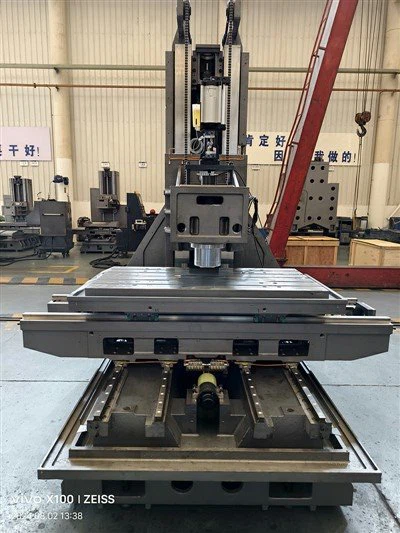
First off, let’s talk about spindle issues. The spindle is like the heart of a horizontal milling machine. A real common problem is spindle vibration. You start noticing this weird shaking when the machine’s running. There could be a few reasons for it. One, the spindle bearings might be worn out. Over time, as you use the machine a lot, those bearings can wear down, causing the spindle to wobble. It’s like when you have a wheel on your bike that’s all loose – it just doesn’t spin right. Another reason could be an imbalance in the tools attached to the spindle. If the tool isn’t properly balanced, it’s gonna throw the whole thing off.
The impact of spindle vibration is no joke. It messes with the quality of your workpiece. You end up with rough surfaces and inaccurate dimensions. And if you keep running the machine with this problem, it can cause more damage in the long run, like further wearing out of the spindle components. To fix this, you gotta regularly check and replace the spindle bearings. And always make sure your tools are well – balanced before you start using them.
Next up is cutter problems. The cutter is what does the actual cutting work on the material. One big issue is cutter wear. As you use the cutter over and over again to mill different materials, the cutting edges start to dull. It’s like using a dull knife to cut through a piece of bread – it’s just not gonna work as well. When the cutter is worn, it takes more power from the machine to make cuts. You might also notice that the cuts are rougher than they should be, and the machine might vibrate more because the cutter isn’t doing its job smoothly.
Another cutter problem is chatter. That’s a high – frequency vibration between the cutter and the workpiece. Chatter can happen if your cutting parameters are off, like if you’re cutting too fast or with too much depth. It can also occur if the cutter isn’t properly secured in the toolholder. Chatter results in poor surface finish and can even cause the cutter to break prematurely.
To deal with cutter wear, you need to monitor the cutter’s condition regularly. Once you start seeing signs of dulling, replace the cutter. And to prevent chatter, make sure you’re using the right cutting speeds and depths for the material you’re working with. Also, double – check that the cutter is firmly locked in the toolholder.
Now, let’s look at the table movement problems. The table on a horizontal milling machine is where you place the workpiece, and it needs to move smoothly for accurate milling. One common problem is backlash. Backlash is the play or clearance between the table’s leadscrew and the nut. When you try to reverse the direction of the table movement, you might notice a slight delay or a small amount of free movement. This can cause big problems when you’re trying to make precise cuts, especially when you’re doing multiple passes or creating complex shapes.
Another issue with table movement is stick – slip. This is when the table doesn’t move smoothly; it kind of jerks forward and then stops, or vice versa. It’s usually caused by poor lubrication. If the ways (the tracks on which the table moves) aren’t properly lubricated, there’s too much friction, and the table can’t move in a continuous way.
To fix backlash, you can adjust the nuts on the leadscrew or, in more severe cases, replace the leadscrew and nut assembly. For stick – slip, just make sure you’re using the right lubricant and applying it regularly to the ways.
Electrical problems are also a headache. The electrical system in a horizontal milling machine controls a lot of important functions, like the spindle motor, the coolant pump, and the table movement motors. One common electrical problem is a blown fuse. Fuses are there to protect the electrical components from over – current. If there’s a short – circuit somewhere in the system or if a motor draws too much current, the fuse will blow.
Another electrical issue is a faulty motor controller. The motor controller is responsible for regulating the speed and torque of the motors. If it’s not working correctly, the motors might not run at the right speed, or they might even fail to start.
When you have a blown fuse, you first need to find out what caused it. Is there a short – circuit? Is a motor malfunctioning? Once you fix the root cause, you can replace the fuse. For a faulty motor controller, it might be a bit more complicated. You might need to have an electrician or a technician check it out and either repair or replace it.
Coolant system problems are yet another area of concern. The coolant system is used to keep the cutter and the workpiece cool during the milling process. It also helps to remove chips from the cutting area. One big problem is coolant leakage. You might notice coolant dripping from the machine, which is not only a waste of coolant but can also be a safety hazard as the floor can get slippery.
Another issue is coolant contamination. Over time, chips and other debris can get into the coolant, making it less effective. Contaminated coolant doesn’t cool the cutter and workpiece as well, and it can also cause blockages in the coolant lines.
To fix coolant leakage, you need to find the source. It could be a loose hose, a cracked tank, or a faulty seal. Tighten the hoses, repair or replace the tank or the seal. For coolant contamination, you can use a filter to remove the debris from the coolant, or you can just change the coolant altogether.
Noise and vibration are overall problems that can be a sign of multiple underlying issues. Excessive noise can be due to mechanical problems, like loose parts, worn – out gears, or misaligned components. Vibration, as we’ve mentioned before with the spindle, can also come from other places, like the table or the motor.
If you’re hearing a lot of noise, inspect the machine for loose bolts or nuts and tighten them. Check the gears and other moving parts for wear and replace them if necessary. For vibration, make sure the machine is properly leveled. A machine that’s not level can cause all sorts of vibration problems.
In conclusion, horizontal milling machines are powerful tools, but they come with their fair share of problems. As a supplier, I understand how frustrating these issues can be for you. But don’t worry! Most of these problems can be easily fixed with a bit of maintenance and the right approach.

If you’re facing any of these problems or if you’re thinking about purchasing a horizontal milling machine, don’t hesitate to reach out. We’re here to help you choose the right machine for your needs and provide all the support you require during installation, operation, and maintenance. Whether you’re a small – scale workshop or a large manufacturing plant, we’ve got you covered. So, let’s start a conversation and see how we can work together to make your milling operations more efficient and trouble – free.
Vertical Lathe References:
- "Milling Machine Operations" textbooks
- Industry – specific manuals on horizontal milling machines
- Technical reports from machine tool manufacturers
Smartech Machinery & Equipment Co., Ltd.
As one of the most professional horizontal milling machine machine manufacturers and suppliers in China, we also support customized service. Please rest assured to buy bulk horizontal milling machine machine made in China here from our factory. Contact us for more details.
Address: Room 2832, Changping Commercial Mansion, Shihua Road, Futian Free Trade Zone, Shenzhen, China
E-mail: smartech@smartechcnc.cn
WebSite: https://www.smartech-cnc.com/
