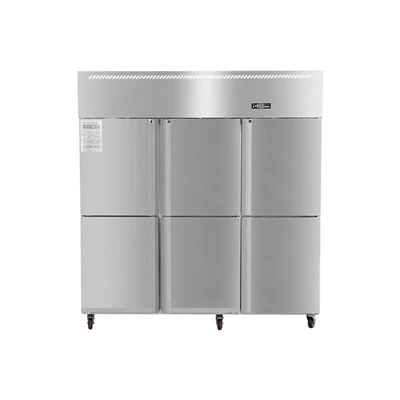
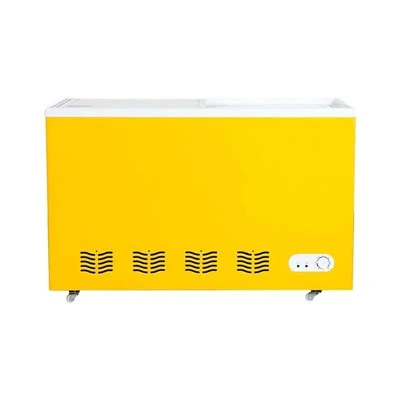
Reach-in Refrigerator Hey guys, let’s cut to the chase because I get so many messages from my customers (and even random folks scrolling TikTok) asking the same question: “How long is food actually good in a chest freezer? I swear mine feels like a time capsule half the time.” As a chest freezer supplier, I’ve heard everything from “freezer burn makes it dangerous to eat” to “my 2-year-old frozen pizza is totally fine” so let’s sort the science from the old wives’ tales here. First off, let’s get one myth out of the way immediately: freezing food doesn’t stop spoilage — it pauses it. Bacteria, mold, and other yucky stuff go dormant at 0°F (-18°C) or below, but they wake up the second you thaw food. That means if your chest freezer isn’t hitting that temperature (pro tip: check it with a thermometer, not just the “cold” setting), your timeline gets way shorter, fast. I’ve had customers buy our chest freezers, leave the door ajar by accident, and wonder why their ground beef got slimy after a month — surprise, that warm pocket in the freezer is a bacteria playground. Now, different foods have different timelines, right? I’ve broken this down into the stuff people actually freeze, not random experimental items no one uses. Let’s start with meats, because that’s probably the biggest category people ask about. Raw red meat — think steaks, roasts, ground beef — lasts 8 to 12 months in a proper chest freezer. Wait, ground beef is on the shorter end of that, 3 to 4 months, because it has more surface area exposed to air, which leads to that freezer burn I mentioned earlier. Freezer burn isn’t toxic, by the way — it’s just dehydration from air touching the food, so it’ll make your steak taste like cardboard and look weird, but it’s not going to make you sick. If you cut off the freezer-burned part, the rest is fine. Raw poultry (chicken, turkey, whole or cut up) is a bit riskier, so stick to 9 months max for whole birds, and 6 months for cut pieces. I always tell new customers freezing poultry in airtight packaging is non-negotiable — if there’s even a tiny gap where air gets in, that freezer burn sets in, and you’ll be tossing it before the 6-month mark. Seafood is another big one, especially if you like buying it in bulk from the fish market. Fatty fish like salmon, mackerel, or herring go rancid faster because of their high oil content, so they’ll only last 2 to 3 months. Lean fish like cod, tilapia, or catfish can stretch to 6 months, which is way better. Pro tip from my team: if you’re freezing whole fish, gut it first — the guts have bacteria that will speed up spoilage, no matter how cold your freezer is. Now, for the non-meat stuff. Frozen veggies and fruit — the ones you buy fresh or even pre-frozen from the store — actually last 8 to 12 months, as long as they’re blanched first. Wait, blanching! That’s the step people skip, and it’s game-changing. Blanching veggies (boiling them for 1-2 minutes, then shocking in ice water) stops the enzymes that break down flavor and texture, so they don’t get mushy or weird tasting after a few months. If you just throw raw carrots in the freezer, they’ll be unedible by month 4. For homemade meals — soups, stews, lasagna, chili — we always tell customers 2 to 3 months. That includes cooked meats in those meals, so if your lasagna has ground beef, it’s leaning more to the 2-month side. Baked goods like bread, cookies, or pastries last 3 to 6 months, and they thaw super fast — just leave them on the counter for an hour. Oh, and leftovers! I can’t tell you how many people freeze a takeout container of pasta and forget about it for a year. Rule of thumb for leftovers: 1 to 2 months, tops. If it’s a creamy dish, go even shorter because the cream will separate in the freezer. Now, what about that “forever food” stuff? I get asked all the time about ice cream — obviously, that’s a chest freezer staple. Homemade ice cream lasts 2 to 3 months, store-bought is 1 to 2 months, because the additives in store-bought break down faster. And don’t forget about things like cheese! Hard cheeses (parmesan, cheddar) last 6 months, soft cheeses (mozzarella, brie) only 1 to 2 months. I’ve had customers freeze block cheese, grate it first, then toss it in a bag — that works, and you can just grab handfuls for pasta later, no need to thaw the whole block. But wait, what about when food goes bad in the freezer? It’s not just freezer burn that’s the red flag. If you see ice crystals all over the food, that’s a sign of temperature fluctuations (your freezer was too warm at some point, then refrozen) — that can make bacteria start growing, even if it’s back to 0°F. Another big one: weird smells. If you pull out a pack of ground beef and it smells off, even though it’s been in the freezer for 6 months, toss it — that’s not freezer burn, that’s spoilage. And if you notice your food is getting dry or shriveled way before the timeline, that’s freezer burn, which you can fix by wrapping it extra tight next time. Now, as a chest freezer supplier, I can tell you this: the biggest mistake people make isn’t the timeline — it’s how they pack the food. Regular freezers (the ones on top of your fridge) are smaller, have more door openings, and colder spots are inconsistent, but chest freezers? They hold a consistent temperature, and because you load them from the top, there’s less warm air escaping when you open the door. That’s why chest freezers are way better for long-term freezing — they can keep food good 2 to 3 times longer than a regular upright. I always recommend my customers use airtight, heavy-duty containers or vacuum-seal bags. The cheap plastic bags from the grocery store? They’ll let air in, so your food will get freezer burn in half the time. Vacuum sealers are worth the $50 or so if you freeze a lot, because they eliminate almost all air, so food stays good for the full timeline. Another hack: label everything with the date you froze it. I swear, 90% of the people I talk to can’t remember if that pack of chicken was frozen last month or last year. A sharpie on the bag takes 2 seconds and saves you from wasting $50 worth of food because you forgot what’s in there. Now, let’s get to the stuff no one tells you. If your chest freezer is 10 years old, it might not be hitting 0°F — that’s a big one. I’ve had customers come to me saying their old freezer’s food is going bad way faster, and when we test it, it’s sitting at 15°F, which is warm enough for bacteria to slowly grow. If your freezer is older than 15 years, it might be time for an upgrade — newer chest freezers are way more energy efficient too, so you’ll save money on electric bills while keeping your food safe. And what about power outages? That’s a huge fear, especially if you live in an area with bad storms. A full chest freezer will keep food frozen for 48 hours if it’s full, 24 hours if it’s half full. If you have dry ice, that adds another 24 to 48 hours, but never touch dry ice with bare hands — it’ll burn you. So if you’re expecting a power outage, keep the door closed as much as possible, even if you’re worried about the food — opening it lets all the cold air out. Wait, can you refreeze food that’s thawed? Only if it’s still at 40°F or below, and has ice crystals on it. If it’s thawed and above 40°F for more than 2 hours, toss it — bacteria have had time to multiply, and freezing won’t kill them. That’s a safety thing, not a quality thing, so never risk it. Let me wrap this up with a quick cheat sheet, because I know you’re scrolling and don’t want to re-read all this: – Raw ground meat: 3-4 months – Raw red meat (steaks, roasts): 8-12 months – Raw poultry: 6-9 months – Fatty fish: 2-3 months – Lean fish: 6 months – Blanched veggies/fruit: 8-12 months – Homemade meals: 2-3 months – Leftovers: 1-2 months – Frozen baked goods: 3-6 months – Hard cheese: 6 months – Soft cheese: 1-2 months And the non-negotiables for keeping food good: keep your freezer at 0°F (-18°C), use airtight packaging, label with dates, minimize door openings, and know your freezer’s age (if it’s over 15 years, check the temp). Now, if you’re looking for a reliable chest freezer that can hold your food at a consistent temp so you don’t have to stress about timelines, hit us up to connect and chat about what size works for you — whether you’re a small family buying bulk, someone who loves meal prepping, or even a side hustle entrepreneur freezing homemade goods. We’ve got options for every space and budget, and we’re here to help you get the most out of your frozen food without wasting a thing. Don’t let old freezer myths make you toss perfectly good food — with the right setup and timeline, your chest freezer can be a huge time and money saver. Chest Freezer
Zhejiang Xingbao Electrical Appliances Co., Ltd.
As one of the most professional chest freezer manufacturers and suppliers in China, we also support customized service. Welcome to wholesale bulk high quality chest freezer in stock here from our factory. If you have any enquiry about pricelist, please feel free to email us.
Address: No. 10 Baisha Road, Lianhang Development Zone, Chang’an Town, Haining City, Jiaxing City, Zhejiang Province, China
E-mail: zjxingbao@gmail.com
WebSite: https://www.sunborncn.com/
