Hey everyone, it’s Jake from your go-to metal bandsaw blade supplier, and today we’re diving into a question I get at least a dozen times a week: how does blade width actually affect cutting performance? I’ve seen so many folks pick a blade just based on tooth count or brand, and they skip the width, which is such a make-or-break detail. I’ve been in this game for 12 years, testing blades in our shop and talking to fabricators, machinists, and hobbyists alike, so let’s cut through the jargon and get real about it. Metal Bandsaw Blade
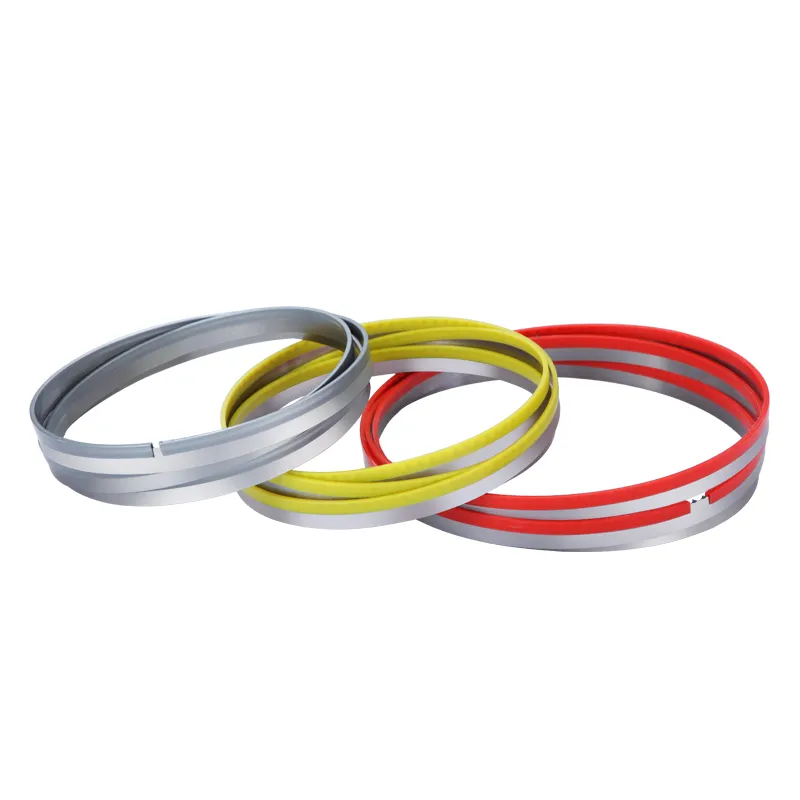
First off, let’s keep this simple: metal bandsaw blades are thin, long strips with teeth on one end, and width is just the distance across that strip—like, if you lay the blade flat, it’s how wide that metal band is. You’ll see it listed in fractions: 1/2”, 3/4”, 1”, 1 1/4”, even wider for big industrial jobs. A lot of new buyers think “wider = stronger” and that’s half true, but it’s not that black and white. Let’s break it down by the main things that matter for cutting performance: accuracy, material removal rate (MRR), blade life, and how well it handles different metals.
Starting with accuracy. If you’re cutting a straight line for a custom bracket or a round bar that needs to fit into a CNC machine, a narrow blade isn’t your friend. Wait, why? The narrower the blade, the more flexible it is. Flex = flexing side to side when you’re pushing it through the cut. That’s called drift—when the cut line veers off straight, like a car pulling to one side. I remember a customer last month, a small machine shop, who was using a 1/2” blade to cut 2” steel square tubing. They kept getting 1/8” drift, so their brackets wouldn’t line up when welded. Switched to a 3/4” blade, and boom—drift dropped to 1/32”. The wider metal band is stiffer, so it resists that side-to-side bend, keeps the cut dead straight. That’s huge for precision work, right? If you’re doing rough cuts for structural steel, drift might not matter as much, but for finished cuts, width is non-negotiable.
Next up, material removal rate, or MRR. That’s how much metal you get off in a minute—speed, basically. Here’s where it gets tricky: wider blades can handle more tension. Bandsaw tension is the tightness you pull the blade when mounting it on the saw. Too loose, it wobbles; too tight, it snaps. Wider blades have more surface area, so they can take higher tension without breaking. Higher tension means you can run the saw faster—faster feed rate, faster cutting. But wait, don’t think wider = faster for every job. If you’re cutting thin sheet metal, a wider blade has more teeth in contact with the thin material, which can cause bogging down. I’ve seen a guy use a 1 1/4” blade on 16ga stainless sheet, and it stalled his saw twice because the teeth were all grabbing at once. For thin stock, a narrower blade (1/2” or 3/4”) lets each tooth engage cleanly without crowding. That’s a key tradeoff I see people miss all the time.
Then there’s blade life, which is a big one because replacing blades adds up fast. How does width play here? Again, it’s tension and load. A wider blade can distribute the cutting force more evenly across its body instead of concentrating it on the teeth. So when you’re cutting hard materials—like Inconel, titanium, or hardened steel—the wider blade doesn’t bend as much, so the teeth don’t get twisted or broken off as easy. But, if you force a wide blade through a job it’s not made for, like thin aluminum, it will work way harder than a narrow blade, and it might fatigue faster. I had a customer last year who was using 1” blades for everything, even 1” aluminum bars. He went through two blades a month, switched to 3/4” for the aluminum, and only went through one. The narrow blade was more maneuverable, didn’t flex as much in the soft metal, so it lasted longer. It’s all matching width to the material and job.
Wait, let’s talk about another thing: the saw itself. You can’t just pick any width blade for your saw. Each bandsaw has a maximum and minimum blade width it can handle. A portable bandsaw for construction sites, for example, usually only takes 1/2” to 3/4” blades. A 14” vertical bandsaw in a machine shop can go up to 1 1/4” or even 1 1/2”. If you try to force a wider blade on a saw that can’t hold it, you can’t get enough tension, so the blade drifts, breaks, or just doesn’t cut right. I always tell customers: check your saw’s spec sheet first, then pick the width within that range based on the job. Don’t skip that step.
Let’s use some real examples to make this concrete. Say you’re cutting 6” diameter carbon steel billet for a shaft. That’s a heavy, tough job. You’ll want a 1” or 1 1/4” blade here. Why? The extra width gives the stiffness to cut through thick material without wandering, and it can handle the high tension needed for fast MRR. If you use a 1/2” blade, it’ll take twice as long to cut, and you’ll probably snap it three times before finishing. On the flip side, if you’re cutting 1/4” aluminum plate for a sign, a 1/2” blade works best. It’s narrow enough to let each tooth cut through the thin material without grabbing, so the cut is smooth and you don’t leave big tooth marks. A wide blade would make deep gouges in the soft aluminum, ruining the finish.
I also get questions about kerf, which is the width of the cut itself. Narrow blades make a narrower kerf, so you use less material per cut. That’s a cost saver if you’re cutting expensive metals, like titanium or copper. For example, if you’re cutting 50 pieces of 1” copper bar, a narrower blade means each cut takes 0.020” less material than a wide one, so over 50 cuts, that’s an extra 1” of copper you get to use. That adds up—especially for high-volume jobs. But again, tradeoff: narrow kerf = more drift, so if you need precision, you might have to accept a slightly wider kerf for a straight cut.
What about common mistakes I see? New fabricators often grab the widest blade they can find because they think it’s “tough.” But I had a guy come in last week, upset because his blade was smoking and dulling fast, on 3/8” stainless. Turned out he was using a 1 1/4” blade, which is way too wide for thin stainless. The extra metal was creating more friction, and the teeth were overloading. Switched to a 3/4” bi-metal blade (by the way, bi-metal is way more durable than carbon steel for most jobs) and he cut 10 pieces before the blade even felt warm. That’s the kind of mistake that costs time and money, and it’s all about width.
Another thing: blade tracking. That’s how well the blade sits on the saw’s wheels. Wider blades track better on most standard saws, right? Because there’s more edge to sit in the wheel’s groove. Narrow blades can slide off the wheel if tension is off, which causes the blade to twist or break. So if your saw is old, or you’re running a portable model, a mid-width blade (3/4”) is often the most versatile because it tracks well, fits most saws, and works for a range of materials.
Wait, let’s not forget about tooth pitch. I know this blog is about width, but width and pitch go hand in hand. A wider blade can fit more teeth per inch (TPI), but not always. For thin material, you want higher TPI (more teeth) so at least two teeth are in contact with the material at all times. A narrow blade can have a high TPI without crowding, while a wide blade for thick material might need lower TPI (fewer teeth) to let chips escape. So when you pick a width, make sure the tooth pitch matches the material thickness too—width is the start, but pitch is the next piece.
So to wrap this up, let’s list the key takeaways so you don’t have to remember the whole thing:
- Wider blades = stiffer, less drift, more accurate cuts, can handle higher tension and tough thick materials. But they’re too much for thin materials, can bog down, leave wider kerfs, and cost more if you don’t need the stiffness.
- Narrow blades = more flexible, narrower kerfs, better for thin or soft materials, good for portability, but drift more, less blade life on heavy jobs.
- Always check your saw’s minimum/maximum width first—can’t force a blade that won’t mount right.
- Match width to your job: thick/tough metal = wider, thin/soft metal = narrower, precision work = slightly wider to avoid drift.
I’ve been selling blades for years, and the biggest mistake people make is ignoring width. They focus on brand or TPI, but width is the foundation of how well the blade will perform. If you’re not sure what blade you need, just reach out—we test blades every day, and we can help you pick the right width (and everything else) for your specific job, whether it’s a small shop project or a big industrial run. We don’t do one-size-fits-all here, and we’re happy to chat through your needs, no pressure.

If you’re tired of blades that drift, snap, or take too long to cut, let’s connect. We’ve got a range of widths, from portable 1/2” blades up to 1 1/4” industrial blades, all bi-metal for extra durability, and we can help you find exactly what works for your setup. Hit us up to talk through your project, and we’ll make sure you get the right blade for the job.
Wood Bandsaw Blade References:
- Metalworking Solutions: Bandsaw Blade Width and Cutting Performance, Manufacturing Today, 2022
- Industrial Machining Handbook: Selection and Application of Bandsaw Blades, Society of Manufacturing Engineers, 2021
- Field Test Data: Bandsaw Blade Width Effects on Cut Accuracy and Tool Life, Journal of Materials Processing Technology, 2020
- Portable and Vertical Bandsaw Operator Manuals: Blade Width Specifications for Common Saw Models, North American Tool Supply, 2023
Zhejiang Sipu Sawing Industry Co., Ltd.
With abundant experience, we are one of the most reliable metal bandsaw blade manufacturers and suppliers in China. Please feel free to buy high quality metal bandsaw blade made in China here from our factory. We also accept customized orders.
Address: No. 1129 Cangling Road, Huzhen Town, Jinyun County, Lishui City, Zhejiang
E-mail: ls@sipu.onaliyun.com
WebSite: https://www.sipu-saw.com/
