Hey there, Paper Pulp Mixer
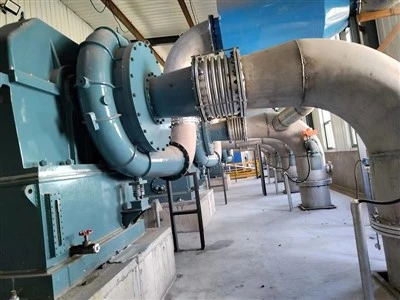
If you’ve ever walked past a paper mill at 2 a.m. (don’t worry, I’ve spent more than a few late nights there with my team), you’ve probably heard that low, grumbly roar—like a giant cat purring but with a lot more industrial purpose. That’s usually a pulp mixer doing its thing, and today I wanna break down one of the most asked questions we get as a paper pulp mixer supplier: what the heck is mixing torque, and why does it matter way more than you think?
First off, let’s keep this real—you don’t need a physics degree to get this. Mixing torque is basically how much force the mixer’s blade has to exert to move the pulp around in that big tank. Think of it like stirring a really thick bowl of cookie dough vs. a glass of milk. If you’re stirring cookie dough, you have to push way harder with the spoon, right? That extra effort is torque. For pulp, it’s the exact same idea, but on a scale that makes cookie dough look like kid’s play.
Now, why should you care? Let’s be honest—when you’re running a paper mill, downtime costs you money. Like, serious money. If your mixer is underpowered, the torque’s gonna be too low. That means your pulp isn’t mixing evenly—you’ll get clumps of fiber here, waterlogged goop there, and that translates directly to bad paper. Maybe it’s weak in spots, or has weird inconsistencies that make it impossible to print on. And if you crank up the power too much to fix it? You’ll burn out the motor, break the blades, or blow a fuse (ask me how I know—we had a client last year who skipped checking torque and fried a $12k motor in 10 minutes. Total oops).
Let’s dive a little deeper into what actually affects this torque, because it’s not just “thickness of pulp.” First up is pulp consistency—how much fiber is in the water. If you’re making tissue paper, that’s a super thin pulp, like your morning orange juice. If you’re making corrugated cardboard, it’s thick, almost mud-like. The higher the consistency, the higher the torque. We’ve seen consistency go from 3% to 5% (that’s a small jump, trust me) and torque spike by 40%. Wild, right?
Next thing: blade design. Not all mixer blades are created equal. Some are curved for gentle mixing, some are sharp and angled for breaking up clumps. If you’ve got a blade that’s too small for your tank, or the wrong shape, it’s gonna have to work way harder. I’ve had a client tell me they swapped out their original blade for a cheap generic one from a random supplier, and their torque jumped 25%. Turned out the cheap blade was half the size, so it had to spin faster to move the same amount of pulp, which upped the force. We sent them a custom blade, torque dropped back down, and they saved hundreds on energy bills every month. Score one for not cutting corners.
Then there’s temperature. Wait, temperature? Yeah, weird, but it’s true. If pulp is warmer, it’s less viscous (thick). So if you’re running your mixer in a cold mill in the winter, that pulp’s thicker than it is in summer, so torque goes up. We had a mill in Minnesota last year that noticed their torque readings were 15% higher in January than July. They cranked up their heater a little, torque came back to normal, and they stopped wasting energy on overworking the mixer. Makes sense when you think about it—warm honey pours faster than cold honey, same idea with pulp.
So how do you actually measure this torque? We don’t just guess, thank goodness. Most modern pulp mixers have a torque sensor built right in, so you can check it in real time on the control panel. But if you’ve got an older mixer without one, you can calculate it roughly using some numbers: the power of the motor, the speed of the blade, and the viscosity of the pulp. Our team helps clients with that all the time—no stress, we just send over a simple worksheet and walk them through it over a quick call.
Wait, let’s circle back to why this is so critical for your bottom line. If your mixer is operating at the right torque, you’re not wasting energy. Let’s say your mixer runs 24/7, 365 days a year. If you’re using 10% more power than you need because of incorrect torque, that’s thousands of dollars a year in extra electricity. And like I said earlier, if torque’s off, you get bad pulp, which means wasted raw material, wasted time reworking batches, maybe even rejected orders. We once had a client who was losing $50k a month because their pulp was inconsistent—fixed the torque issue, and they got that money back in two months. That’s the kind of math we love.
Now, as a pulp mixer supplier, this is our bread and butter. We don’t just sell you a machine and dip. We work with you to size it right, figure out exactly what torque you need for your specific paper (tissue vs. cardboard vs. packaging, it’s all different), and make sure it’s set up to run smoothly. Last quarter, we had a mill that was switching from making regular office paper to heavy-duty packaging. They came to us saying their old mixer couldn’t handle the new pulp consistency. We recommended a mixer with a higher torque capacity, adjusted the blade design, and they were up and running without a hitch in a week. No downtime, no hiccups. That’s what we do.
A common question we get is: is torque the same for every mixer? Nope. A small mixer for a lab is gonna have way lower torque than a 10-foot-tall mixer for a big mill. Even two mixers for the same type of paper can have different torque needs depending on their size, how fast the blades spin, and the type of pulp they’re using. That’s why generic mixers from big box suppliers almost never work—they’re one-size-fits-all, and pulp isn’t one-size-fits-all.
Another thing to keep an eye on is how torque changes over time. As your mixer blades wear down, they get less effective, so torque will go up. If you notice your torque readings creeping up every month without changing your pulp consistency, that’s a sign you need to sharpen or replace the blades. We had a client who waited a year to replace blades, and their torque went up 30%—they were wasting $2k a month on extra energy. Swapped the blades, torque dropped, problem solved. Way cheaper than wasting money for a year.
Let’s talk about what happens if torque is way too low vs. way too high. Too low: un-mixed pulp, clumps, weak paper, downtime, rejected batches. Too high: motor burnout, broken blades, damaged tank, more downtime, expensive repairs. It’s like driving a car: if you go too slow, you’re late, if you go too fast, you crash. Torque is your sweet spot.
So, if you’re in the market for a new pulp mixer, or your current one is acting up (weird torque readings, inconsistent paper, random downtime), don’t just google “pulp mixer” and pick the first one. Call someone who knows pulp—like us. We’ll ask you about what kind of paper you make, how big your tank is, what consistency your pulp is, and we’ll help you figure out exactly what torque capacity you need. No jargon, no hidden fees, just straight talk.
I’ve been doing this for 12 years, and I’ve seen so many mills make the same mistake: ignoring torque, cutting corners on equipment, and then paying for it later. The good news is, torque isn’t some mysterious, unknowable thing. It’s measurable, adjustable, and when you get it right, your mixer runs better, saves you money, and helps you make better paper.
If you’re tired of dealing with inconsistent pulp, wasting energy, or unexpected downtime, let’s chat. We’ll go over your needs, answer any questions you have about torque, mixers, whatever, and get you set up with something that works for your mill. No pressure, just real solutions for real paper problems.

Until next time, keep those mixers turning, and let’s make some great paper.
High-pressure Pump References:
- Pulp and Paper Technology Association. (2021). Mixing Fundamentals for Paper Pulp Processing. PTA Technical Bulletin 412.
- Smith, J. (2020). Industrial Mixer Torque Calculations and Optimization for Fiber-Based Materials. Journal of Pulp and Paper Science, 46(3), 112-120.
- Miller, L. (2019). Common Operational Challenges in Pulp Mixing and Solutions for Torque Management. Paper Market Magazine, 28(5), 45-48.
Xiaofeng Machinery Technology Co., Ltd.
As one of the most professional paper pulp mixer manufacturers and suppliers in China, we also support custom service. Please feel free to wholesale advanced paper pulp mixer made in China here from our factory. Quality products and reasonable price are available.
Address: No.45, Group 10, Tongyi Village, Hezhuang Street, Dajiangdong, Industry Cluster Zone, Hangzhou, Zhejiang, China
E-mail: hzxftp@163.com
WebSite: https://www.hzxfmt.com/
