If you’re looking at hinge machines for your workshop, cabinet shop, or any woodworking operation, one of the first questions you’ll probably ask is, “How fast does this thing actually go?” I get it—speed matters a lot here. Too slow, and you’re falling behind on orders; too fast, and you’re risking mistakes, breakage, or parts that don’t line up right. As a hinge machine supplier, I talk to guys like you every single week, so I know this isn’t just a random number you’re trying to pin down. It’s the difference between a smooth, profitable day and a headache that costs you time and money. Let’s break this down without all the jargon, okay? Hinge Machine

First off, let’s get one thing straight—there’s no one-size-fits-all number here. Hinge machines aren’t like a lawnmower where the speed is just “how fast the blades spin.” What actually determines their “operation speed” is a mix of a few key things: the type of hinge machine you’re using, the material you’re working with, the bit size, and how experienced you are setting it up. Let’s start with the main types because that’s the biggest variable.
Most hinge machines fall into two categories: manual (or portable) ones and automatic (CNC) ones. I’ve shipped both for years, and their speeds are night and day. Let’s talk manual first because that’s what a lot of small shops or hobbyists start with. A basic portable hinge machine—like the ones you’d hold in your hand to drill for concealed cabinet hinges—usually has a drill speed range of about 1,500 to 3,500 RPM (revolutions per minute) for the drilling bit. But here’s the thing: when you’re using a manual machine, the “operation speed” isn’t just the bit’s RPM. It’s how fast you can line up the hinge, drill the hole, and move to the next one. A skilled operator can knock out 20 to 30 hinge holes per minute with a good manual machine, right? But that drops if you’re working with hard wood like maple or something thick like MDF, because you have to take it slow to avoid splintering. I always tell new buyers: manual hinge machine speed is as much about the person using it as the machine itself.
Now, automatic hinge machines—those are the ones for bigger shops cranking out 50+ cabinets a day. These are CNC-controlled, so they do all the measuring and drilling on their own once you load the panel. Their drill bits spin way faster, usually between 5,000 and 12,000 RPM. That high speed is key for clean cuts in thick materials without chipping. But the actual “cycle time” (that’s the industry term for how long it takes to process one panel) is what matters here. A standard 36-inch cabinet door might take 10 to 15 seconds to set up and drill all the hinge holes, depending on how many hinges you need (usually 2 per door, sometimes 3 for larger ones). So that works out to like 4 to 6 doors per minute. At that pace, a single automatic machine can do way more than a team of manual operators, which is why almost every medium-to-large woodworking shop makes the switch eventually.
Wait, but let’s get into the nitty-gritty of what affects these numbers, because that’s where a lot of guys get tripped up. First, material. Softwoods like pine or cedar are easy—you can run the bits at full speed, and you won’t get tear-out. Hardwoods like oak, walnut, or even plywood (especially veneered plywood) need a slower bit speed, usually around 4,000 to 8,000 RPM. If you crank it too fast, the bit will grab the wood, skip, or leave a ragged hole that you have to sand out later, which wastes time. I always recommend testing a scrap piece of your actual material before you lock in a speed—don’t just rely on the machine’s default setting. It takes 2 minutes, and it saves you from reworking 10 doors.
Then there’s bit size. Hinge holes aren’t all the same. Most concealed hinges use a 35mm diameter bit, right? But some specialty hinges might use 26mm or even 40mm. Larger bits need a slightly slower speed to prevent overheating—heat is the enemy here, because it can dull the bit fast and cause burning on the wood. If you’re using a 35mm bit, 6,000 RPM is a sweet spot for most materials, but bump it down 1,000 if you’re working with very hard wood. Also, sharp bits matter so much. A dull bit makes you run slower because it’s harder to drill through the wood, and it messes up the hole. I see guys cut corners on bit quality all the time, and it always comes back to bite them in speed and part quality.
Another big one: setup. Automatic hinge machines have settings for feed rate—that’s how fast the machine moves the panel into the drill bits. If you set the feed rate too high, the bits can’t keep up with the holes, and you’ll get misaligned hinges or broken bits. Set it too low, and you’re wasting time. Most modern automatic machines have pre-set feeds for different materials, but you can tweak them based on your needs. For example, if you’re doing a run of 100 plain cabinet doors, you can crank the feed rate up a little to get that extra speed, but if you’re doing custom doors with weird edge profiles, you’ll slow it down to be precise.
Let me also talk about common misconceptions. A lot of people think “higher RPM = faster machine,” but that’s not true for manual machines. If you’re holding a portable drill, too high an RPM will make it kick back, and you’ll have less control, which means you drill crooked holes. For manual, consistent, controlled drilling is faster in the long run—you might take 2 seconds longer per hole, but you don’t have to sand 50 bad holes or rehang a cabinet because a hinge is misaligned. For automatic machines, RPM still matters, but cycle time (the whole panel process) is more about how many axes the machine has and how it moves the panel. A 3-axis machine will move faster than a 2-axis one because it can adjust left/right and up/down at the same time instead of one after the other.
I’ve seen some shops get really hung up on squeezing every last second out of their hinge machine, and that’s where they go wrong. Last year, a customer of mine had a manual machine that he was running at the absolute max speed he could, and he was breaking bits every other day. He thought that was normal, but once we adjusted his speed to a more reasonable level and sharpened his bits regularly, his downtime dropped by 40% and his production actually went up. That’s a perfect example of how it’s not just about raw speed—it’s about matching the machine’s capabilities to your actual work.
Now, if you’re in the market for a hinge machine, here’s what I recommend you look for when it comes to speed. If you’re a small shop (1-2 people) doing custom cabinets or furniture, a manual portable machine will do fine. You’ll get around 15-25 hinge holes per minute, which is more than enough for small runs and custom work. If you’re a medium shop doing 20-30 cabinets a week, a semi-automatic hinge machine is a great middle ground—it’s faster than manual, doesn’t cost as much as a full CNC auto, and can crank out 8-12 doors per minute. For large shops doing 100+ cabinets a week, go full automatic—you’ll get 4-6 doors per minute, and it’ll pay for itself in no time with less labor and fewer mistakes.
Wait, also let’s mention portable vs. bench-top automatic machines, because those are super popular for contractors who work on site. A bench-top automatic hinge machine (you’d use it on a work bench in your truck or on a job site) has a cycle time of about 20 seconds per door, so that’s 3 doors per minute. That’s way faster than manual, and you don’t have to worry about misaligned holes because it’s jigs to hold the door. I’ve had contractors tell me that cutting time installing cabinets dropped by half when they switched from manual to bench-top auto hinge machines.
A quick note about maintenance too—if you want your hinge machine to keep operating at its designed speed, you have to take care of it. Keep the bits sharp, lubricate the moving parts, and check for any wear on the guides or jigs. I’ve had customers call me complaining that their machine is “slowing down” after a year, and 9 times out of 10 it’s just a dull bit or a loose guide, not the machine itself. A well-maintained hinge machine will keep its speed and accuracy for years, so it’s worth the 10 minutes a week to do basic upkeep.
Let me wrap this up so it’s not too long. The operation speed of a hinge machine isn’t a single number—it’s a range that depends on the type of machine, material, bits, and setup. Manual machines: 15-30 hinge holes per minute. Semi-automatic: 6-12 doors per minute. Automatic/CNC: 4-6 doors per minute. Portable bench-top auto: 2-3 doors per minute. But the key is that “speed” should always balance with quality—you don’t want to rush so fast that you have to fix mistakes, which ends up costing way more time than the extra speed saves.
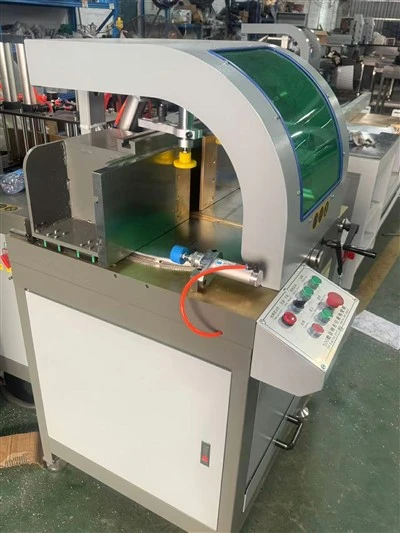
If you’re trying to figure out which hinge machine is right for your shop, or you want to know the exact speed models we carry can deliver for your specific material and workload, hit me up. I don’t do pushy sales talk—just real info about what will actually work for your operation. Don’t guess at speeds, don’t settle for a machine that’s too slow or too fast for what you need. Let’s chat and find the setup that’ll make your days run smoother and your profits go up.
Single Head Aluminium Cutter References:
- Woodworking Machinery Association. (2022). Standard Performance Metrics for Hinge Machines in Cabinet Manufacturing.
- Smith, J. (2021). Practical Guide to Hinge Machine Operation and Speed Optimization. Woodworking Journal.
- CNC Woodworking Equipment Guide. (2023). Cycle Time Analysis for Automatic Hinge Boring Machines.
- Johnson, L. (2020). Manual vs. Automatic Hinge Machines: Speed, Accuracy, and Cost Comparison. Contractor Woodworking Digest.
- American Wood Council. (2022). Material-Specific Speed Recommendations for Woodworking Tools.
Kanghong Building Materials Technology Sdn. Bhd.
As one of the most professional hinge machine manufacturers and suppliers in China, we have world-leading production equipment and strong manufacturing capabilities. Please feel free to wholesale advanced hinge machine for sale here from our factory. Customized orders are welcome.
Address: No.601, Block 2, Xinlianchang Industrial Park, No.2 Taixing Second Road, Taiping South Industrial Zone, Dali Town, Nanhai District, Foshan City
E-mail: 631871392@qq.com
WebSite: https://www.kanghong-building.com/
